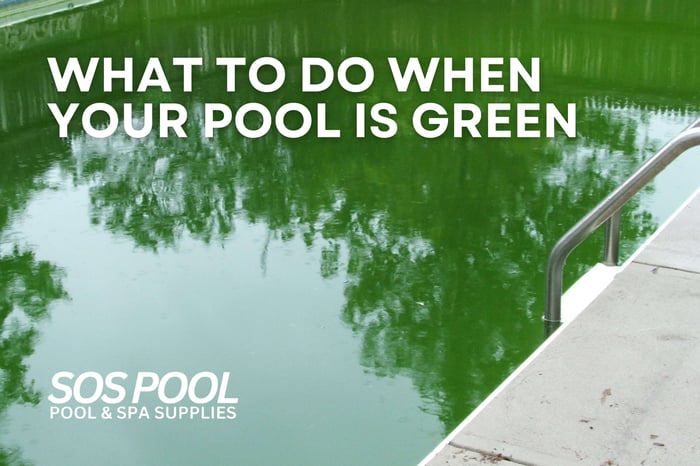
A green pool is a frustrating sight for any pool owner, but it’s a common issue that can be fixed with the right approach. The green color is typically caused by algae growth, which thrives when chlorine levels drop, pH levels are off, or filtration is inadequate.
The good news? A green pool is reversible, and with the right treatments, brushing, and filtration, you can restore your water to clear, swim-ready condition in no time.
In this guide, we’ll walk you through why your pool turned green, how to fix it, and how to prevent it from happening again.
Why Did Your Pool Turn Green?
Before you start cleaning, it’s important to understand why your pool turned green in the first place. The most common causes include:
- Low Chlorine Levels – Without enough chlorine, algae can grow rapidly.
- Unbalanced pH & Alkalinity – If pH is too high, chlorine becomes less effective, allowing algae to thrive.
- Poor Filtration – A clogged, dirty, or failing filter won’t remove contaminants properly.
- Warm Weather & Rain – Heat speeds up algae growth, while rain can dilute chlorine and introduce contaminants.
- Debris in the Pool – Leaves and organic matter consume chlorine, creating a breeding ground for algae.
Tip: Regular water testing and maintenance can help prevent green water before it starts.
Step 1: Test Your Water Chemistry
Before adding chemicals, test the water to determine pH, alkalinity, and chlorine levels.
Use a test kit or test strips to measure:
- pH (Ideal: 7.4 – 7.6)
- Total Alkalinity (Ideal: 80 – 120 ppm)
- Free Chlorine (Ideal: 1 – 3 ppm, but for a green pool, you’ll need to raise it much higher)
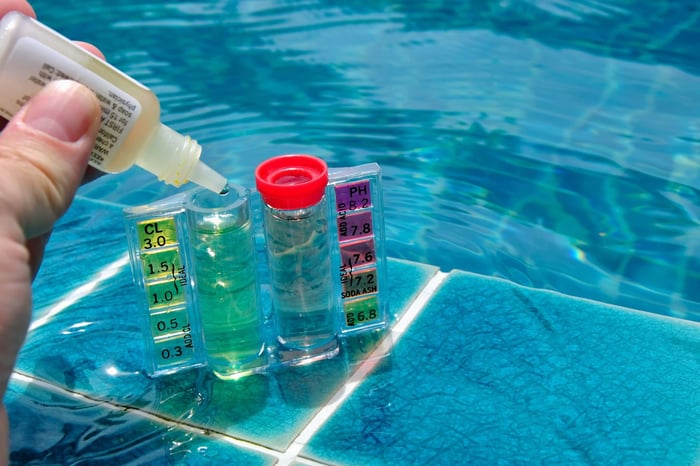
Tip: If pH is too high (above 7.6), chlorine will be less effective, so you’ll need to lower pH before shocking.
AquaChek Silver 7 in 1 Test Strips | 100 Pack | 551236

$27.99
$32.99
Silver 7-in-1 is our most comprehensive test strip. Trusted by service professionals, this test strip tests for seven key parameters which are Total Hardness, Total Chlorine, Total Bromine, Free Chlorine, pH, Total Alkalinity, Stabilizer (Cyanuric Acid) in seconds. Reliable monitoring… read more
Step 2: Balance the pH & Alkalinity
Since high pH reduces chlorine’s effectiveness, balance the levels before shocking the pool.
- If pH is too high (above 7.6), add pH decreaser (muriatic acid or sodium bisulfate).
- If pH is too low (below 7.2), add pH increaser (sodium carbonate).
Tip: Always adjust alkalinity first since it helps stabilize pH.
Step 3: Shock the Pool with High-Dose Chlorine
The best way to kill algae fast is by superchlorinating the pool.
- Use liquid chlorine for instant results OR cal-hypo granular shock for extra power.
- Add enough chlorine to raise levels to 10-30 ppm (Check packaging for exact dosage)
- For severe algae, double or triple the dose.
Tip: Shock at night to prevent chlorine loss from sunlight.
Step 4: Brush the Pool Walls & Floor
Once chlorine is added, algae will begin dying, but it needs to be physically removed from surfaces.
- Use a stiff pool brush to scrub walls, steps, and the floor.
- Brush thoroughly to loosen algae, allowing the chlorine to work better.
- Pay extra attention to shady areas, as algae thrives where sunlight doesn’t reach.
Pentair Swimming Pool Curved Brush | Nylon Bristles | Aluminum Brush | R111342

$39.99
$49.99
The OEM Pentair Curved Pool Brush R111342 is a durable 25-inch cleaning tool designed with an aluminum back for added strength and long-lasting performance. It features UV-stabilized blue nylon bristles, which are effective for cleaning pool walls and floors without… read more
Tip: Brushing also prevents algae from sticking to surfaces in the future.
Step 5: Run the Filter & Backwash Regularly
After shocking and brushing, your filter will be working hard to remove dead algae.
- Run the pool pump 24/7 until the water is clear.
- For sand & DE filters: Backwash frequently to clear out algae buildup.
- For cartridge filters: Remove & rinse off algae every few hours.
Tip: If using a DE filter, add fresh DE powder after backwashing to restore efficiency.
Step 6: Use an Algaecide (Optional for Extra Prevention)
Once your chlorine levels are high, adding an algaecide can provide extra protection.
- Use a copper-based algaecide for severe green algae outbreaks.
- For mild algae, a standard algaecide works well.
- Do NOT add algaecide before shocking—chlorine breaks it down.
Tip: Some algaecides foam or stain surfaces, so always read product instructions carefully.
Step 7: Monitor & Re-Test Water Chemistry
Once the pool starts clearing up:
- Test chlorine levels daily—if chlorine drops below 5 ppm, shock again.
- Test pH & alkalinity to ensure stability.
- Continue filtering & brushing until water is completely clear.
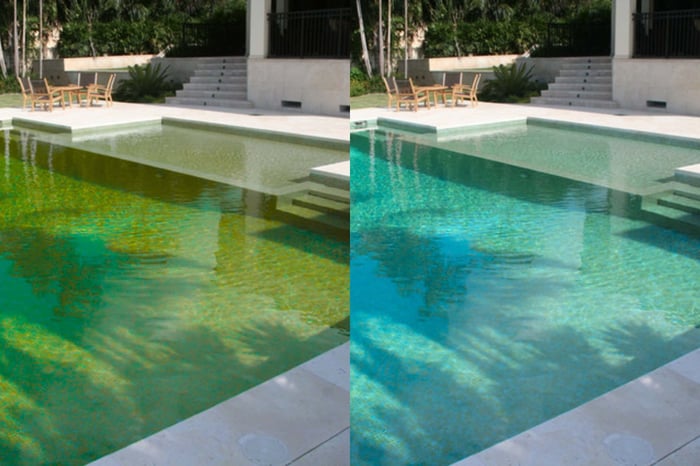
Tip: Once the pool is clear, adjust chlorine back to 1-3 ppm for normal maintenance.
How to Prevent Your Pool from Turning Green Again
Once your pool is back to crystal-clear condition, prevent algae from returning by following these steps:
- Maintain proper chlorine levels (1-3 ppm) at all times.
- Shock weekly during hot weather or heavy rain.
- Keep pH & alkalinity balanced.
- Run your filter at least 8-12 hours per day.
- Brush & vacuum regularly to prevent algae buildup.
Tip: Rainwater can throw off water chemistry—test & adjust your pool after storms.
Final Thoughts: Green Pool? Act Fast for the Best Results!
A green pool is frustrating but fixable. The key is to act quickly, shock aggressively, and maintain filtration and brushing to eliminate algae completely.
- Test & balance water chemistry before shocking.
- Shock with high-dose chlorine to kill algae fast.
- Brush, filter, and backwash regularly to clear dead algae.
- Maintain chlorine levels & weekly pool care to prevent future algae growth.
By following these steps, your pool will be clear, safe, and swim-ready in no time!
Need help choosing the right pool treatments? Check out our top-rated products for tackling algae and maintaining crystal-clear water!