How to Find and Fix Pool Pump Leaks Before They Get Worse
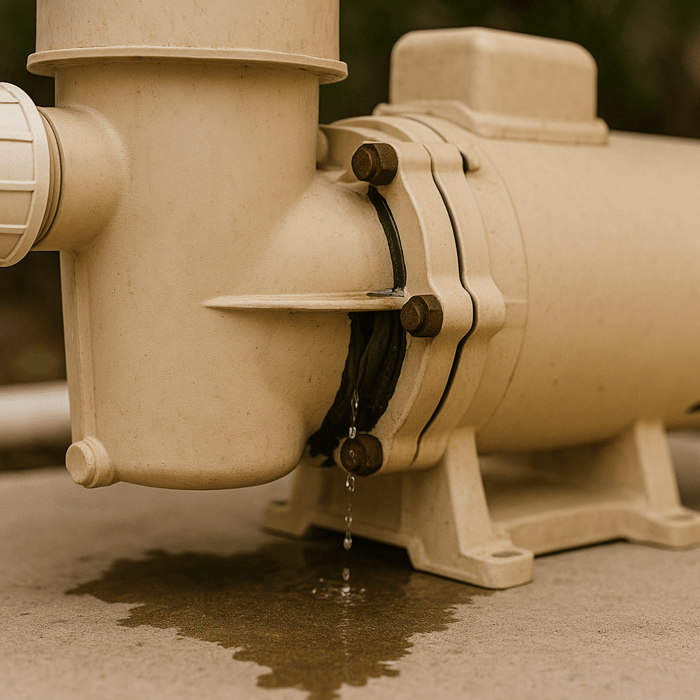
Pool pump leaks are a common headache for pool owners, especially after periods of heavy use, temperature swings, or equipment wear over time. If you’ve noticed wet spots near your pump, air bubbles in your return lines, or a sudden drop in filter pressure, you may be dealing with one. Whether your setup includes a Hayward Super Pump, Pentair WhisperFlo, or Jandy FloPro, tracking down the source of the leak early can help you avoid expensive repairs and unexpected downtime.
What Causes Pool Pump Leaks?
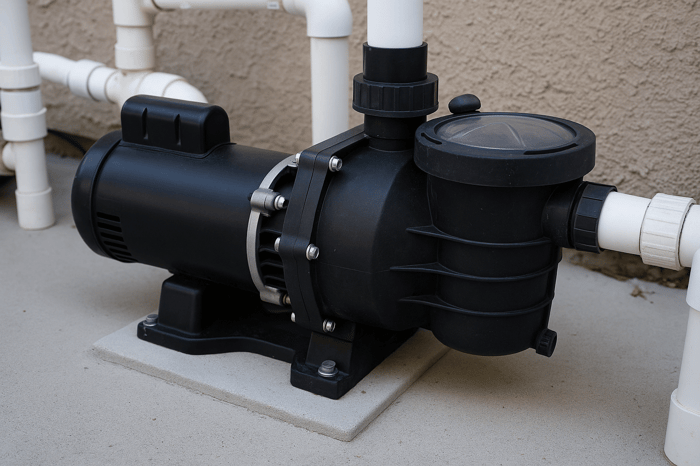
Pool pumps rely on a series of gaskets, O-rings, and seal points to keep water flowing efficiently. Over time, those components wear down due to age, exposure to heat, chlorine, and vibration. If any of those seals fail, water can leak out—or air can sneak in—affecting your pump’s performance and risking long-term equipment damage.
Here are the most common leak sources:
Shaft seal – When this seal fails, water often leaks out near the motor. You may notice moisture, corrosion, or rust forming at the rear of the pump housing.
Pump lid O-ring – This gasket can dry out or flatten over time, letting air in or water out. If you see bubbles in the pump basket, this is a likely cause.
Union connections – These twist-lock plumbing joints are convenient but prone to leaks when overtightened, cross-threaded, or misaligned.
Pump housing – Cracks around the volute, a loose seal plate, or stripped bolts can also be responsible for leaking water.
How to Tell If You Have a Leak (Even If You Don’t See It)
Not all pool pump leaks are obvious. Look for the following signs:
Air bubbles coming out of return jets while the pump is running
Inconsistent filter pressure on your gauge
Visible scaling or mineral stains around fittings and bolt areas
Unusual pump noise from air intrusion or dry-running impellers
Water loss that isn’t explained by evaporation
A simple way to check: dry the pump area, turn it on, and use a flashlight to spot fresh moisture. Leaks often show up within a few minutes of operation.
Use Our Replacement Parts Tool to Identify the Right Fix
Trying to guess which shaft seal or gasket fits your pump can waste time and money. That’s why we recommend using the Replacement Parts Search Tool on our homepage.
Just enter your pump brand and model, and it will bring up a clickable parts diagram showing exactly which shaft seals, O-rings, lid gaskets, and union kits are compatible with your unit. It’s the easiest way to get the right part the first time—especially if you’re doing the repair yourself.
Final Thoughts: A Small Leak Can Turn Into a Big Problem
Most pool pump leaks can be fixed with simple part replacements if you catch them early. But left untreated, even a slow drip can damage your pump motor, reduce circulation efficiency, and cost you more in the long run.
Before replacing the whole pump, check the basics—lid gasket, shaft seal, unions, and housing bolts. Then use our homepage part finder to get exactly what you need to stop the leak and get back to enjoying your pool.