How Long to Run Your Pool Pump to Keep Water Clean
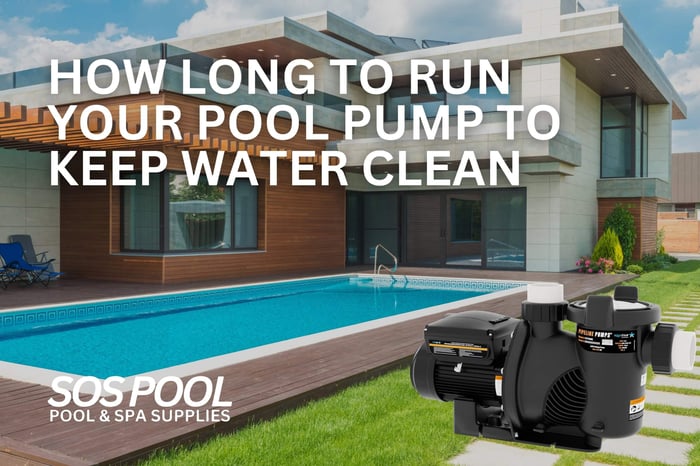
If you’re wondering how long to run your pool pump, you’re not alone. The right runtime can mean the difference between sparkling water and a cloudy, unbalanced pool. While many factors play a role—like your pump type, pool size, and the time of year—getting your schedule right is the key to easier, more affordable maintenance. In this guide, we’ll show you how to determine your ideal pump runtime, reduce energy use, and keep your system working efficiently.
Why Running Your Pool Pump Matters
Circulating your pool water daily helps keep the water clean, balanced, and free of contaminants. Without regular circulation, you risk algae growth, uneven sanitizer levels, and build-up of debris on pool walls and floors.
Daily circulation supports:
Even distribution of chlorine or other sanitizers
Removal of fine particles and debris through the filter
Consistent water chemistry
Prevention of green or cloudy water
How Long to Run Your Pool Pump? It Depends
While there’s no one-size-fits-all answer, most pools benefit from running the pump enough to complete a full water turnover once a day. The number of hours it takes depends on your pool size and equipment.
Pool Size and Volume
A larger pool needs more time for full circulation:
Pools under 15,000 gallons: 6–8 hours is usually sufficient
Pools over 20,000 gallons: 8–12 hours or more may be needed
Pump Type
Single-speed pumps operate at full power and typically run 6–8 hours
Dual-speed pumps allow you to circulate at low power for longer
Variable-speed pumps are the most efficient, often running 10–12 hours a day while using less energy
Seasonal Conditions
Summer: Longer run times to handle heat, sunlight, and heavy usage
Winter: Shorter daily cycles may be fine if the pool is covered or unused
How to Estimate Your Ideal Pump Runtime
To calculate your daily runtime:
Find your pool volume (in gallons)
Check the flow rate of your pump (usually in gallons per hour)
Divide pool gallons by GPH to get the number of hours for one turnover
For example:
A 24,000-gallon pool with a pump moving 3,000 GPH needs about 8 hours of runtime (24,000 ÷ 3,000 = 8).
Energy-Saving Tips for Pump Schedules
Efficiency matters, especially if you're using your pump every day. Try these simple strategies:
Use a programmable timer to run your pump during off-peak electricity hours
Break up your schedule (e.g., 4 hours in the morning and 4 in the evening)
Consider upgrading to a variable-speed pump if you're looking for long-term energy savings
Tools and Parts to Support Long-Term Pump Performance
Even a perfect schedule won’t help if your equipment is struggling. Worn seals, cracked baskets, or broken impellers can cut circulation short and cost you more in the long run.
Pump Parts Collection
From replacement lids to impellers, browse our Pump Parts Collection for essential fixes that keep your system running strong.
Use the Replacement Parts Search Tool
Need help identifying your pump model or compatible parts? Use our Replacement Parts Search Tool on the homepage. Just enter your brand and model to view an interactive diagram and locate what you need quickly.
Wrapping Up: Set It, Monitor It, Adjust as Needed
Knowing how long to run your pool pump makes it easier to keep your water clear and balanced without wasting energy. Most pools do best with one full turnover per day, and that can vary depending on your setup. Once you find the right runtime, stick to it—but remember to adjust it based on weather, usage, and equipment changes.
Ready to improve performance or fix a failing part? Check out our full pump parts collection and interactive search tool to keep everything running efficiently.